Exclusive Q&A featuring Naomi West
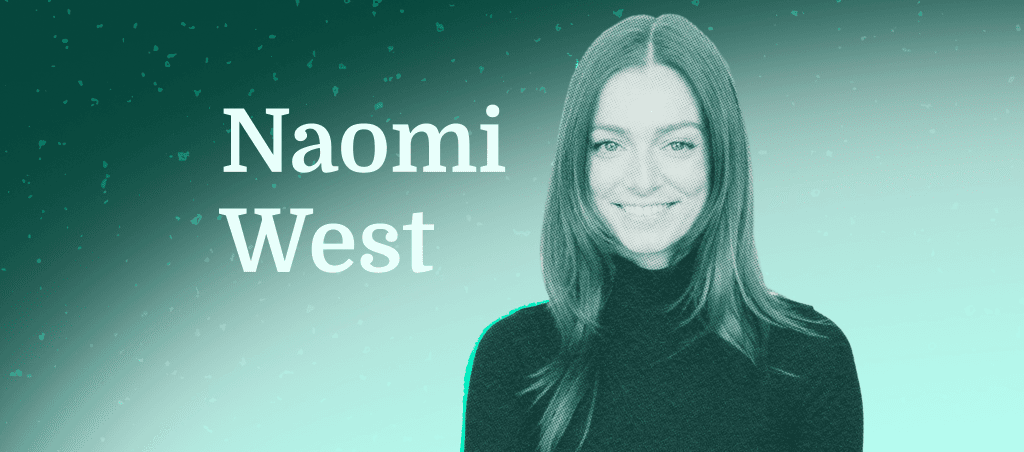
Get to know Naomi West, Customer.io’s Senior Product Marketing Manager for Email and AI. Learn about her role, Customer.io’s unique value in the market, and how partners like Scalero contribute to shared customer success.
Q: What inspired you to join Parcel and therefore, Customer.io?
A: There’s something special about working at a company where you’ve directly experienced the value of what the tool provides already. As a career email and lifecycle marketer, I live and breathe well, email tools. Marketing and talking about solutions to our (marketer) pain points comes easily, I don’t feel like I’m hard-selling anything—because conversation comes so naturally. I’m genuinely passionate about my day-to-day, and it’s a bonus that I get to advocate internally for solutions (vs. just submitting support tickets and hoping the business takes my feature requests seriously).
I was ultimately inspired to join Parcel because of my connection to the end user (as an end user myself).
Before I ever recommend a tool or advocate for a product, I have to have experienced the end value myself. There are a lot of affiliate and influencer programs now, and it's hard to know whether a product is actually valuable or if someone's just being paid to talk about it. Let alone, all the marketing fluff! I want to always feel morally right about what I'm advocating for and maintain an authentic voice. Since being acquired by Customer.io, I still feel just as confident, passionate, and excited about the product. I genuinely see how it leads to business success, and therefore, my day-to-day talking about this product is something that just genuinely excites me. Doesn’t really feel like work!
Q: What separates Customer.io from its competitors?
A: Its flexibility in content creation is one of its key superpowers. And not just email design—I’m also talking about its automations; crafting workflows that don’t have to fit into a certain step-by-step mold.
On many platforms, unlocking flexibility is gated to the technical, whereas with Customer.io, even a non-technical marketer can build out complex use cases.
For example, in Customer.io, marketers can build out email designs that they might have needed an email developer for a few years ago or when on another platform. They can also launch a multi-step campaign that allows them to take action and create attributes that are assigned to a user profile as the campaign continues. Customer.io in a lot of ways is a powerful blank canvas that marketers and relationship builders can mold to their own needs.
Q: How do lifecycle partners such as Scalero play a role in Customer.io’s success?
A: There’s so much value in investing time up front in creating a strong lifecycle foundation. This could include the creation and implementation of an email design system, or the building of key automations such as a welcome series. By investing 20-30 hours up front, you’ll end up saving yourself 200-300 hours down the line. And by creating a strong foundation, you can now build emails in Customer.io in seconds, or already be nurturing subscribers towards success through automated campaigns.
Lifecycle partners like Scalero unlock that for businesses that only have a few individuals at the helm—I often see IC roles underwater with all the responsibilities on their shoulders. Plus by leaning on a lifecycle partner like Scalero, you are getting insights beyond just the day-to-day bubble that you live in. They bring visibility into peers in your industry, as well as campaigns and strategies outside of your space that could be very easily mirrored and just as valuable to your use case. It’s a worthwhile decision to bring on a team like Scalero.
Q: What is a feature of Customer.io that you feel like brands overlook too often?
A: Where to start? Sometimes when I think of features, and I chat with marketers, it's often the "you don't know what you don't know" scenario because there are so many different features depending on what you try to do.
I would say my feature set that I often like to wow subscribers or marketers with is any QA feature related to email design. Whenever I'm chatting with email or lifecycle marketers and I show them email content analysis, they are often left stunned by its capabilities. Not only can it assess your emails voice and tone, but it also has operational features such as spell-check or reformatting opportunities that might be missed even with a second human set of eyes.
I also think Design Studio's Accessibility Checker is a really fantastic email QA feature that will only become more important over time. We are seeing new pieces of legislation emerge, such as the European Accessibility Act that went into effect in 2025, that advocate for the importance of accessible content. The Accessibility Checker looks out for things like color contrast and variances in dark mode that might end up with an ideal experience for your end subscriber. This specific tool gives you visibility into whether or not your entire subscriber base will be able to consume your content, or whether you are leaving potential relationships on the table.
Q: Where do you see the lifecycle marketing industry going in the next five years?
A: Over the past five years, I've watched email and lifecycle marketing gain greater awareness in the broader digital marketing ecosystem. Teams and businesses are realizing that these owned channels are incredibly valuable not only for driving revenue but for building relationships. As we watch social media continue to be plagued by confusing algorithms and move towards an e-commerce focus, brands and businesses that previously relied on social media for audience building are going to shift their focus to email. With that increase in shift, I can only see more importance and investment being placed in the lifecycle marketing industry over the next five years.
The use of AI will unlock higher degrees of personalization at scale that were looked at as cumbersome or high time investment for a marketer to lean into. I expect to see more investment in automation over the long term. I expect to see higher volumes of campaign localization through unlocked translation via AI. Where teams previously needed to bring in translators to localize their content, AI can now make this possible at scale. And finally, I expect to see more email-focused roles blend into multi-channel or omnichannel roles, where they also fully own in-app messaging and push notifications. These channels will continue to become strong and valuable, almost on par with email.
On the flip side, despite an increase in importance, I actually see teams and team structures becoming smaller. The dream of an IC role becoming a fully fledged or larger team will be squashed. Marketers will need to become life cycle engineers, learning:
What data they need
How to action against it
How to build automations
How to design and analyze better
But they'll lean on an AI tool to solve for the pain points that they might run into. Sure, this may sound familiar and may also be something that a lot of ICs already own today, but I see the output becoming a lot more complex.
Q: What advice do you have for lifecycle marketers?
A: Challenge your own biases and don't be afraid to build cross-functional relationships. The best lessons of my career have come from A/B tests where I had a strong hypothesis and was proven wrong. Maybe it's just an ego hit that I've gotten over, or maybe it's realizing that most people don't know their audiences and until you are forthcoming with that honesty, you won't know what is best for your business. You have to test and you have to be open to learning, ultimately challenging the biases that you went into projects with and came out with learnings that didn't remain siloed to just you and your emails.
And on the second note, I attribute a lot of my career success to the internal relationships I've built and the ways in which I've challenged myself through learning about what others in the company do. I want to work in tandem with product managers to understand what items on the roadmap need to be proactively worked on from a marketing perspective. I want to work closely with software engineers and developers on feature production. As a marketer (whether it's me identifying as an email/product marketer), building and maintaining great cross-functional relationships has allowed me to help position products, because my opinion is valuable!
To close this question out, I would also just encourage lifecycle marketers to have fun with their job. We work in a role that allows us to be creative, and there's something really cool about that. Find something about your day-to-day that excites you and lean into that. For me, it's email as an entire channel, but for others, it could be copywriting, it could be analysis, it could be as niche as an event-driven in-app message. Finding something that excites you is going to lead you to enjoying your job more and make you a more effective marketer.
Q: What should the world know about Naomi West?
A: Community connection means the world to me, and meeting and speaking with other email and lifecycle marketers is what fills my cup.
So much so that three years ago, I created a conference called Unpacked, meant for email and lifecycle marketers. In its third year, Unpacked had over 1,700 registrations, signaling the need that other individuals in roles similar to me have for the same community connection that I crave. Stuff like this keeps reminding me that it's worthwhile to reach out. It's worthwhile to put together the meetup. It's important to fill your network with people to not only celebrate with, but also commiserate with when needed as well.
In my free time, I teach email at an online digital academy called Jelly Academy, where I see new business owners and entry-level marketers learn about email and start to identify that it is a really great channel, giving me so much value.
Short story long: If you are ever in an email or lifecycle role and want to talk about your day-to-day, or have someone to pitch strategy to, or you even have questions about email whether it's analysis, data, content, accessibility, I can be that person for you. So please do not hesitate to reach out!
This is part of Scalero’s exclusive Q&A series with industry leaders. Please contact us if you or your company would like to be featured.